Get A Quick Quote

Name *

E-mail *

Company Name *

Country / Region *

Product Interested In *

Helical Piles

Ground Screws

Anchoring Rods

Accessories

Estimated Quantity

Upload Drawing / File

Phone / WhatsApp

Message / Project Details*

Thank you for your inquiry. Our sales engineer will review your request and contact you as soon as possible.

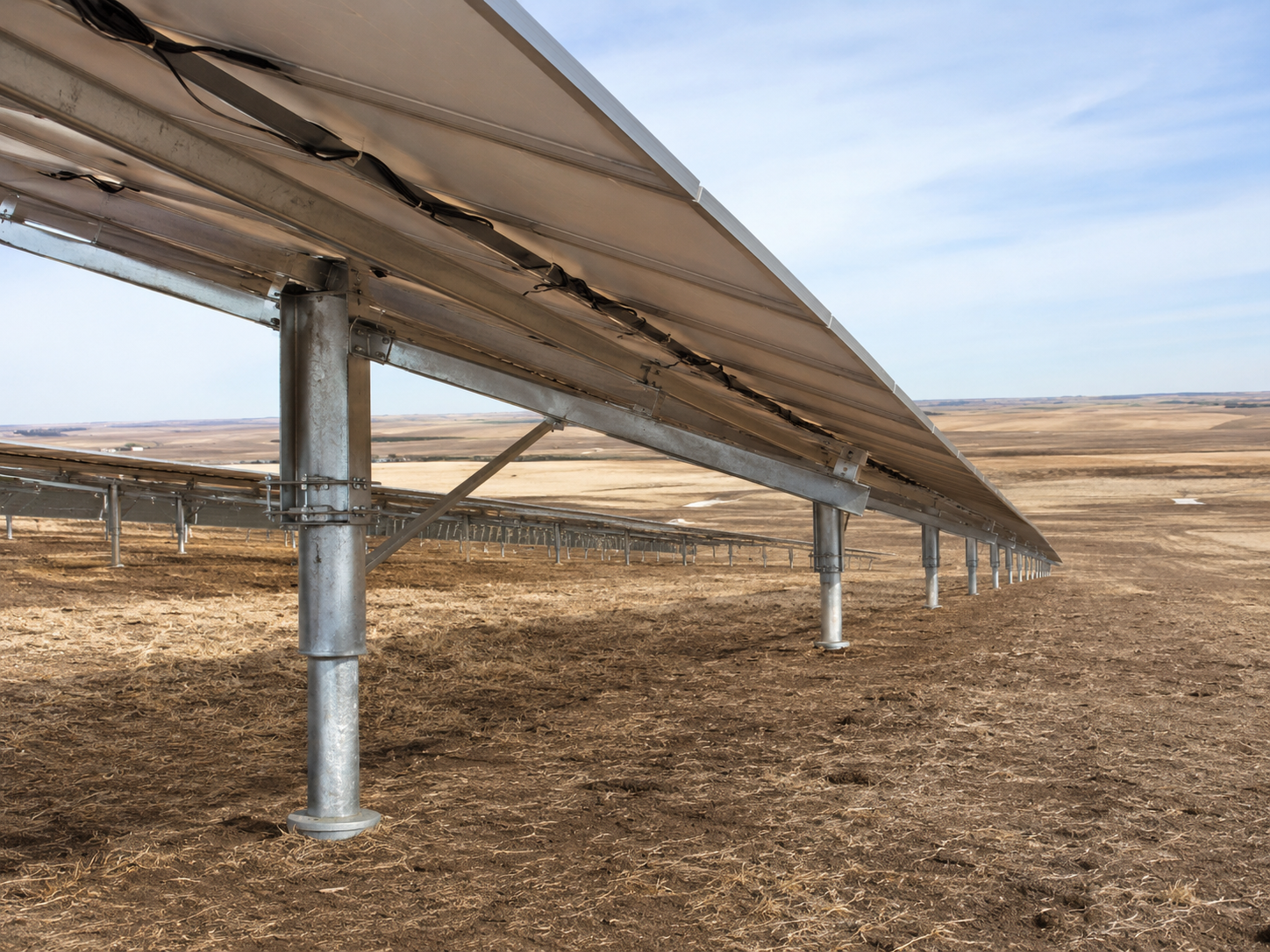
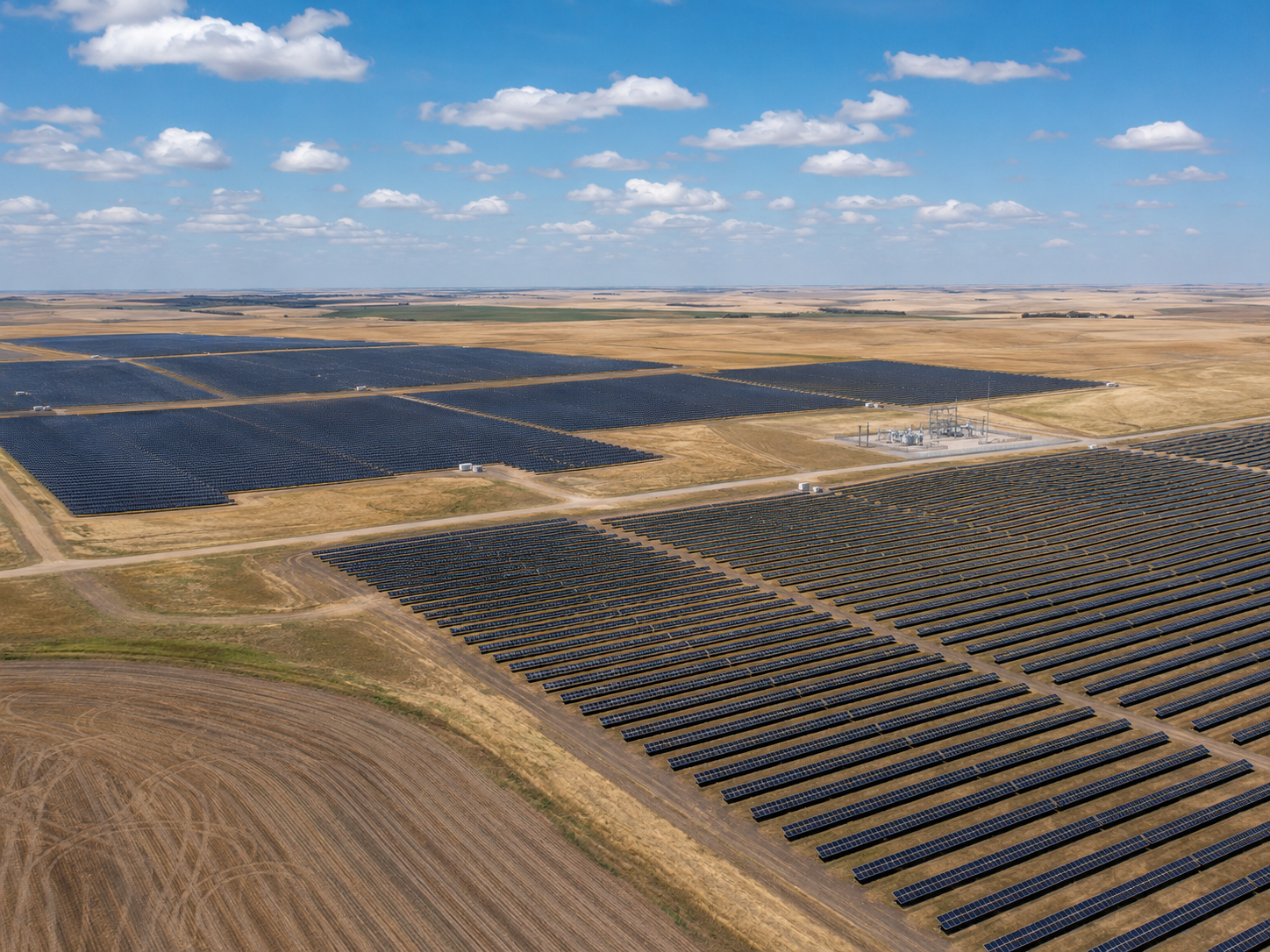
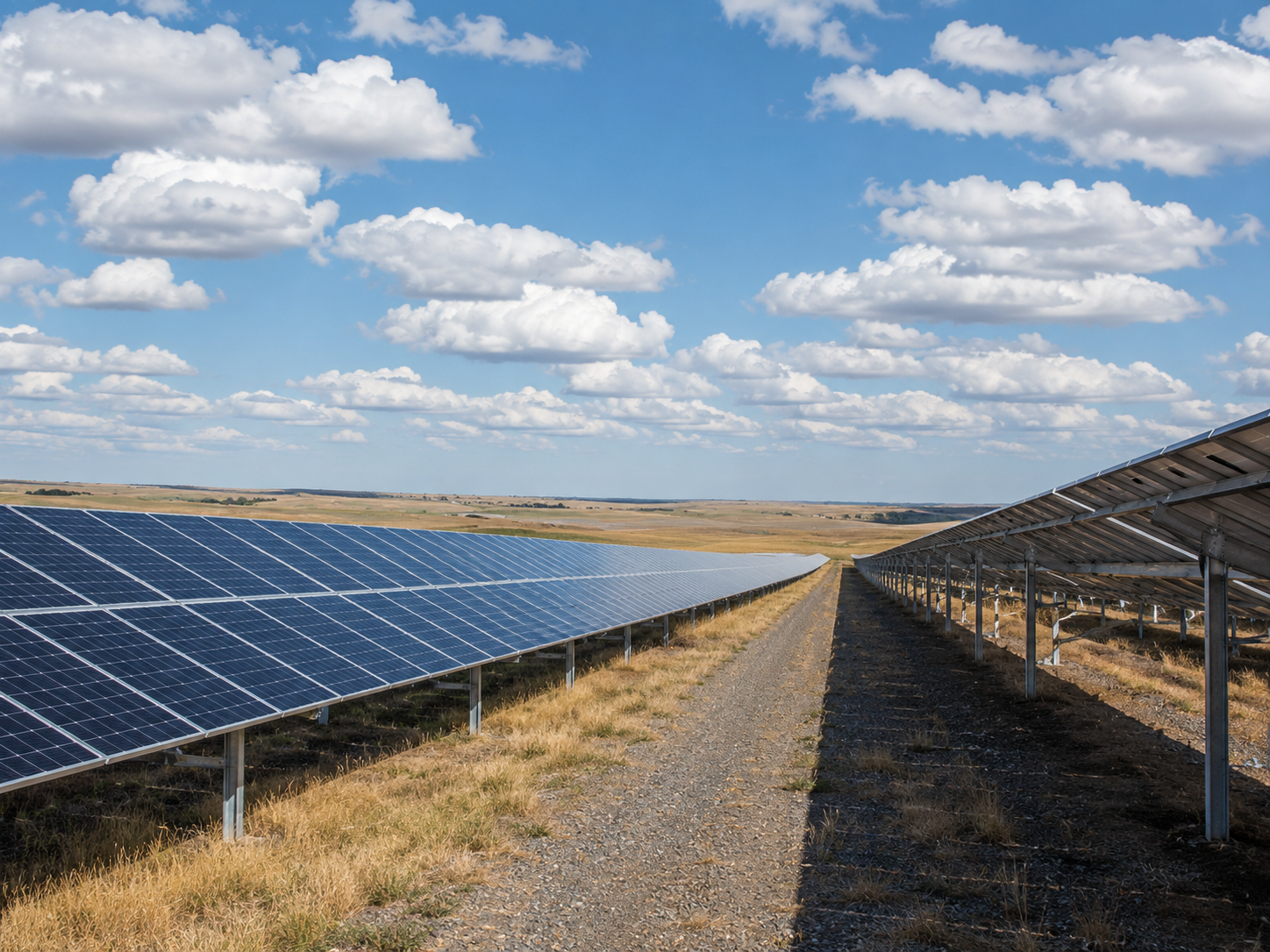
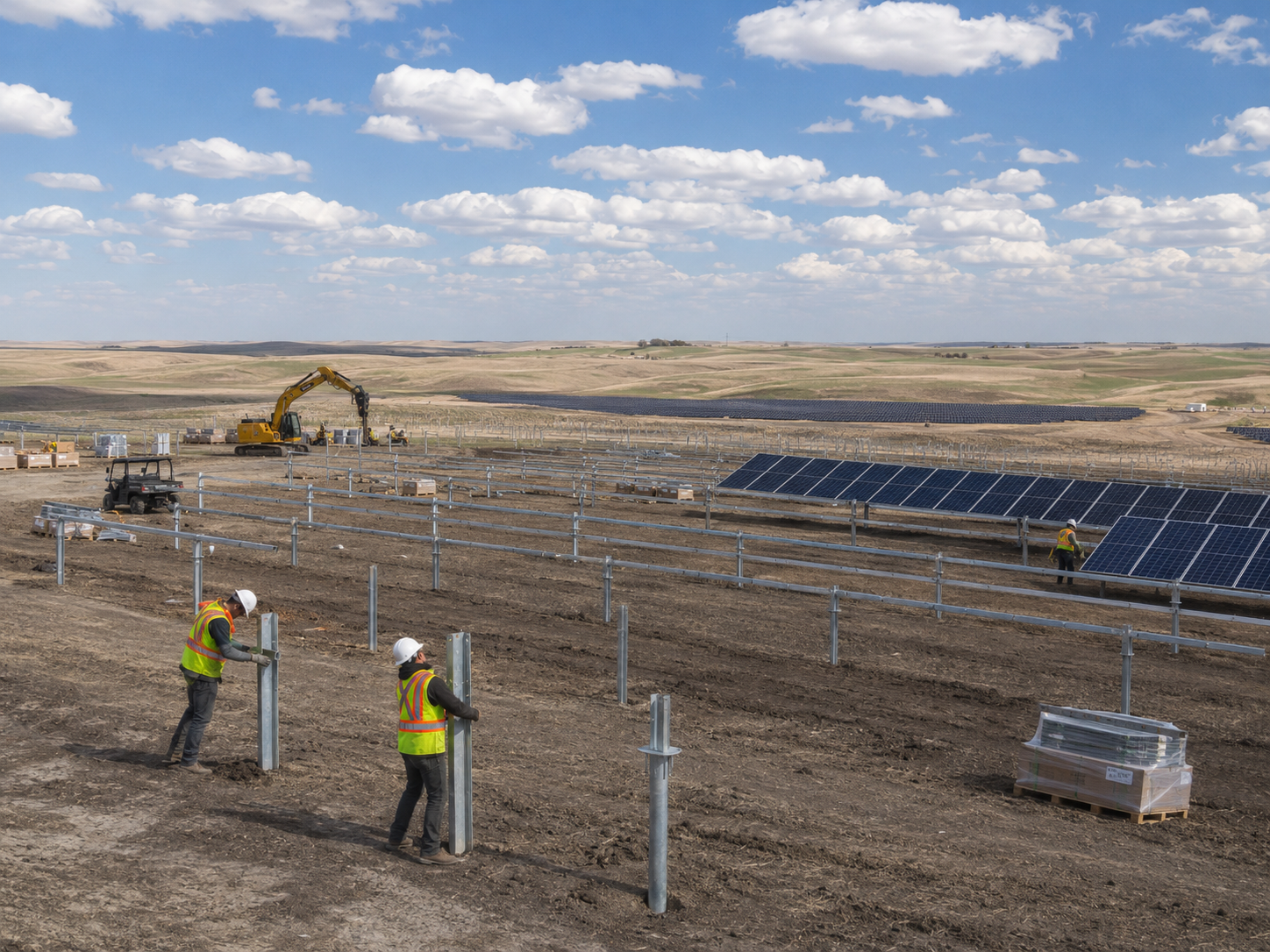
Helical Pile Foundation Case for PV Power Station: Large-Scale Ground-Mounted Solar Project in Alberta, Canada

Summarize
intro

intro
Overall summary of the project

Foundation systems for large-scale ground-mounted photovoltaic power stations must not only meet the load-bearing requirements of individual support positions, but also maintain installation efficiency, elevation uniformity and long-term stability during large-area, mass construction. This case serves as the flagship project for the "Solar Foundation Solutions" section on SSP’s new official website, demonstrating the advantages of round-shaft helical piles in new energy projects, including rapid installation, reliable uplift resistance and minimal soil disturbance.

Project Background
This project is located in Alberta, Canada, representing a typical application scenario of large-scale ground-mounted photovoltaic power stations. Unlike conventional building foundations, PV power stations feature a massive quantity of foundation points covering a wide area with highly repetitive layout. The foundation system must be highly coordinated with solar mounting frames, module arrangement, cable routing and on-site construction schedules. For such projects, foundations are not isolated civil components; they constitute a critical link that determines the overall installation efficiency of solar supports and the long-term stability of power generation systems. Poor control of pile position deviation, pile top elevation or verticality will adversely affect subsequent mounting frame assembly, module leveling and electrical construction work.
Project Challenge
A huge number of pile points require foundation solutions with high repeatability and superior installation efficiency.
Solar mounting frames are significantly affected by wind loads, so the foundations shall simultaneously resist vertical compression, uplift force and provide adequate lateral stability.
Projects in Canada need to address frost heave, low-temperature construction, variable soil strata and long-term anti-corrosion requirements.
Conventional concrete foundations involve excavation, formwork erection, pouring and curing, which bring heavy pressure on construction duration and logistics during large-area construction.

Engineering Theoretical Explanation

Helical piles are ideal for photovoltaic power station foundations primarily because their helical flights form effective bearing planes within the soil, transferring loads from the upper mounting frames down to more stable soil strata. For solar support structures, in addition to vertical compressive loads induced by self-weight and snow loads, uplift forces generated by wind suction are equally critical. The anchoring effect of helical flights embedded in soil substantially boosts the uplift resistance of the foundation.
From the perspective of construction quality control, the installation torque generated during the screwing-in of helical piles serves as a vital reference for on-site quality inspection. While the ultimate bearing capacity shall be determined by engineering calculations and mandatory load tests, torque records can verify whether the pile shaft has penetrated the designed bearing stratum and improve dimensional uniformity during mass installation.
Compared with conventional concrete foundations, helical piles represent a low-disturbance foundation solution, eliminating large-scale excavation and lengthy curing periods during construction. For photovoltaic projects characterized by dense pile layouts, tight construction schedules and expansive job sites, helical piles significantly streamline coordination between civil works and mounting frame assembly.
Fast Construction
No excavation or concrete curing required. Pile installation and rack assembly can be completed on the same day, cutting construction period by over 60%.
Low Overall Cost
Eliminates concrete, formwork and earth backfilling work, delivering lower total cost than cast-in-place piles and isolated footings.
Strong Site Adaptability
Compatible with soft soil, hard soil, weathered rock, slopes and sites with elevation differences, featuring high terrain adaptability.
Corrosion Resistance & Long Service Life
Adopts full hot-dip galvanizing process to resist corrosion and rust, ensuring long service lifespan.
Design & Calculation Process
Geotechnical investigation report, load calculation, preliminary pile type selection, bearing capacity verification, final pile type confirmation, structural strength checking, anti-corrosion design, drawing and parameter deliverables.

Project Value

Shorten the foundation construction cycle; the mounting frame installation phase can be carried out right after pile installation is finished.
Cut down on on-site excavation, waste soil and concrete wet construction works.
Improve the uniformity and controllability of foundation construction for large-area solar mounting frames.
Reduce difficulties in on-site construction management, enabling rapid deployment of overseas photovoltaic projects.

+86-186 1244 2058

martinliu@ssppilechina.com