





Thank you for your inquiry. Our sales engineer will review your request and contact you as soon as possible.
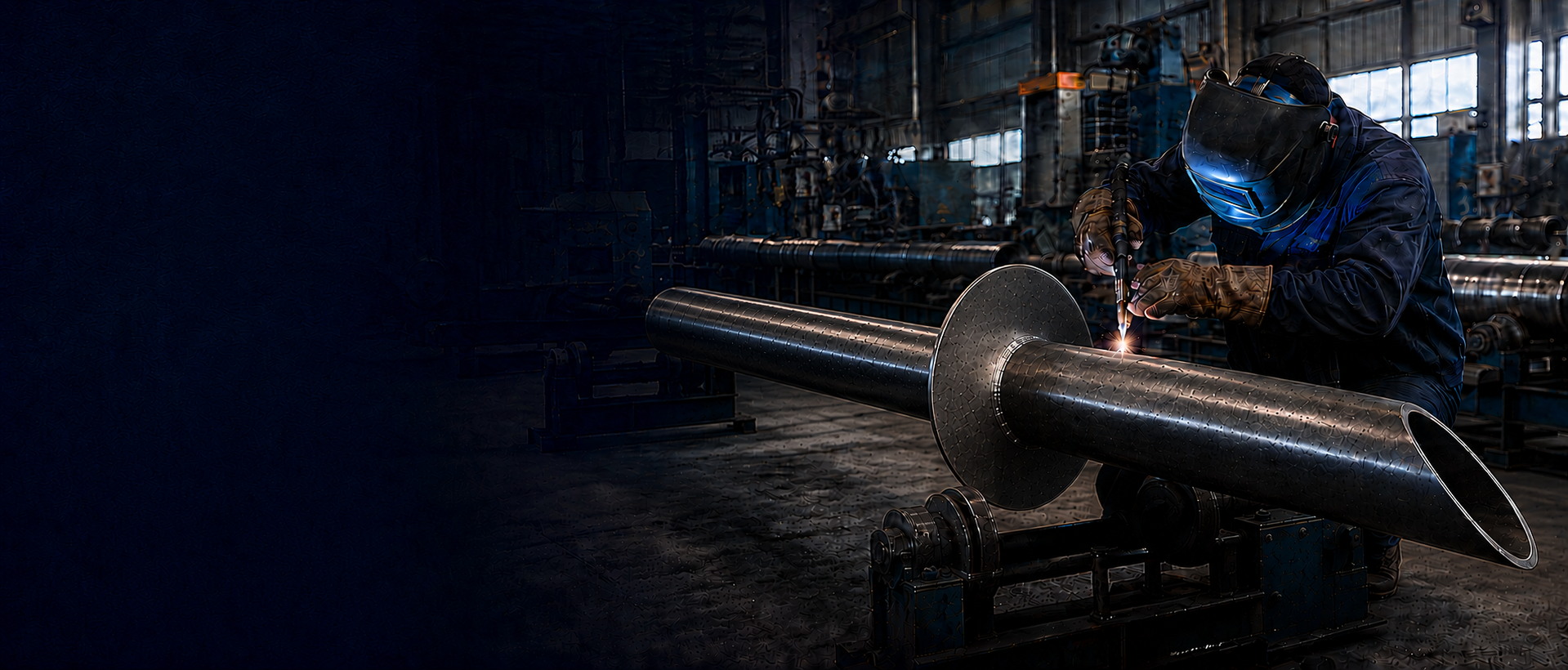


Product & Project Supply Support for Contractors and EPC Teams
Contractors and EPC teams need more than individual pile components. They need a supply partner that can understand project requirements, coordinate production and documentation, and deliver the right products to the required destination. SSP provides this project supply support while keeping final engineering and site responsibility in the proper local hands.
Support Built Around Project Delivery
SSP works with foundation contractors, general contractors, EPC companies, construction companies and project owners in international markets. Some customers arrive with complete drawings and schedules. Others have application requirements but need help defining a preliminary pile configuration and supply scope. Our role adapts to the information available without replacing the customer's appointed engineer or installer.
Manufacturing is carried out at our facilities in China. Our Canadian product engineering team can participate in technical discussions, helping connect project requirements with practical product options and manufacturing considerations.
Information That Helps Us Respond
A productive project discussion normally begins with the site location, intended structure, available geotechnical information, design loads or load reactions, installation constraints, corrosion or service-life requirements, applicable standards, delivery schedule and destination. Drawings, photographs and tender specifications are also useful where available.
Not every enquiry begins with a complete technical package. SSP can identify missing information and explain what should be confirmed by the customer, its geotechnical consultant or local structural/foundation engineer before an order is finalized.
Preliminary Product Selection and Configuration
Based on customer-provided information, SSP can discuss preliminary product selection, shaft and helix options, connection details, extensions, caps, brackets and other accessories. We can also provide general input on application suitability, load-capacity considerations and installation conditions. This helps the project team compare options and prepare a clearer scope for local engineering review.
Recommendations are not a final foundation design and should not be used as a substitute for site-specific engineering. The customer's appointed professionals must verify the selected system against local ground conditions, project loads, codes and approval requirements.
Coordinated Manufacturing and Delivery
Once the approved product requirements are clear, SSP organizes manufacturing, inspection, packaging and shipment. Project supply may include piles, extensions, caps, brackets, accessories and agreed spare parts in one coordinated package. Marking and packing can be arranged to simplify identification and handling at destination.
Where required and agreed, SSP can provide relevant product drawings, packing lists, material certificates, inspection reports, welding documents or galvanizing information. Document requirements should be identified early so they can be incorporated into the production and delivery plan.
Installation Equipment and Practical Guidance
For customers that require practical support, SSP can assist with the selection and supply of compatible installation equipment and tooling. We can also provide equipment operation training and general installation-related guidance, including product handling, connection sequence and installation-record considerations.
Actual site procedures, equipment suitability, safety controls, acceptance criteria and installation decisions must be established and supervised by the customer and its qualified local personnel. Site conditions can vary significantly, so remote guidance cannot replace competent on-site judgment.
Clear Responsibilities, Better Cooperation
SSP focuses on the product and supply side of the project: preliminary product guidance, manufacturability input, production, quality control, documentation and coordinated delivery. The customer controls final design, permitting, construction methods, site safety, installation and acceptance. Defining this division early reduces misunderstandings and allows each party to contribute where it is strongest.
This model supports applications such as solar foundations, modular buildings, boardwalks and walkways, communications and power infrastructure, retaining structures, slope stabilization and projects in challenging soils.



We provide reliable foundation solutions for solar, construction, and infrastructure projects worldwide.


_2.png)
_2.png)
_2.png)


